

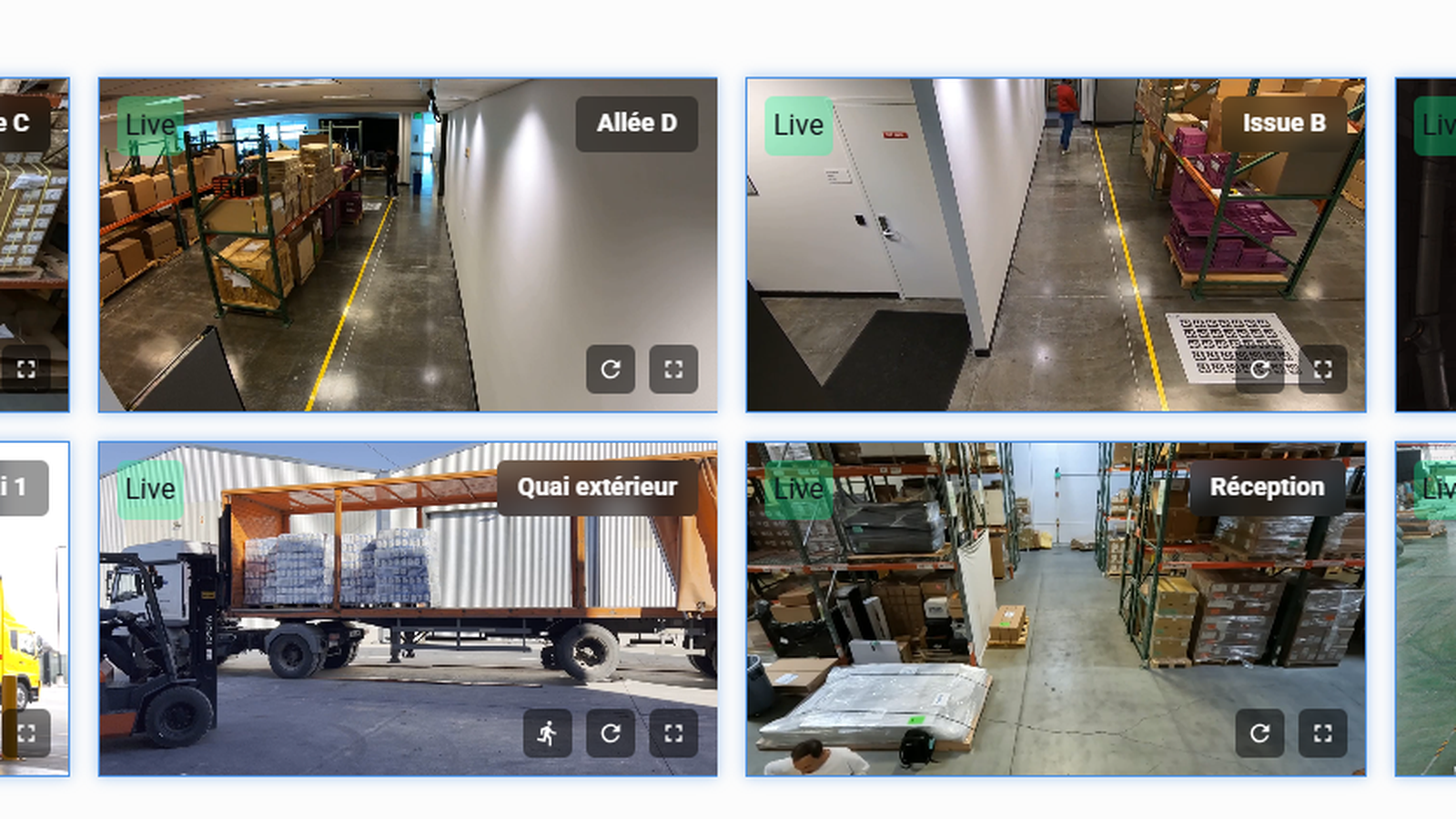
Seven situations your cameras already see, and an inspector finds once a year
In 2025 the French State inspected 279 warehouses in the Lyon region for fire risk: 80% had non-conformities. Most of them are visible on the cameras already installed.
What a warehouse’s cameras already see, and how to turn it into evidence of prevention.
In 2025 the French State inspected 279 warehouses in the Lyon region for fire risk: 80% had non-conformities. Most of them are visible on the cameras already installed.
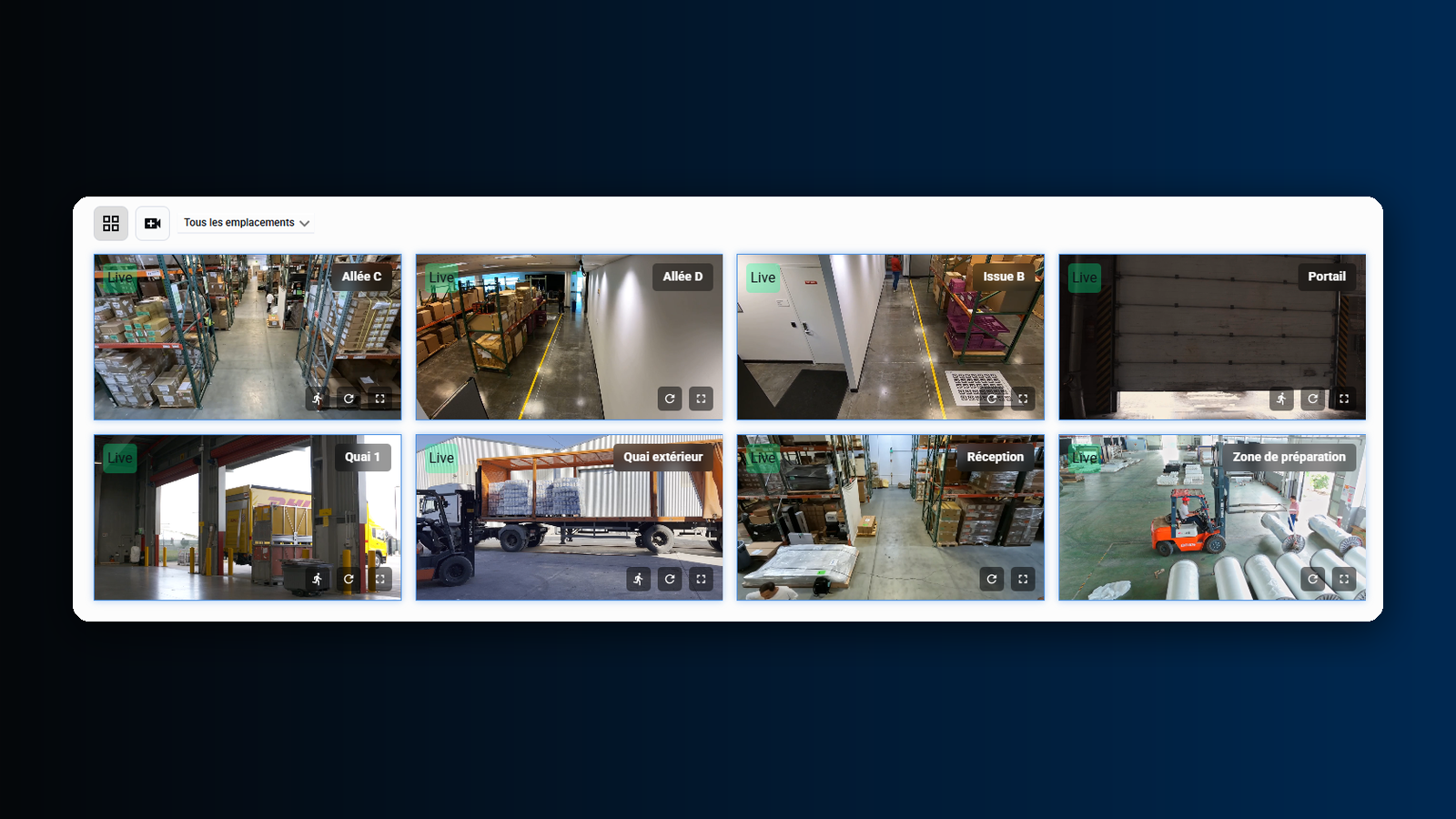
To train a model to verify warehouse states, we paste the states into real footage, systematically, so every example comes with ground truth known by construction. Here is how, and what can go wrong.
Existing vision-language benchmarks do not measure what a monitored camera needs: is a described state true in a zone, under clauses, with calibrated confidence. StateWatch will.

A small vision-language model will not out-describe Gemini or GPT on arbitrary images. It does not need to. On one narrow question, asked on fixed cameras, it can win where it matters.
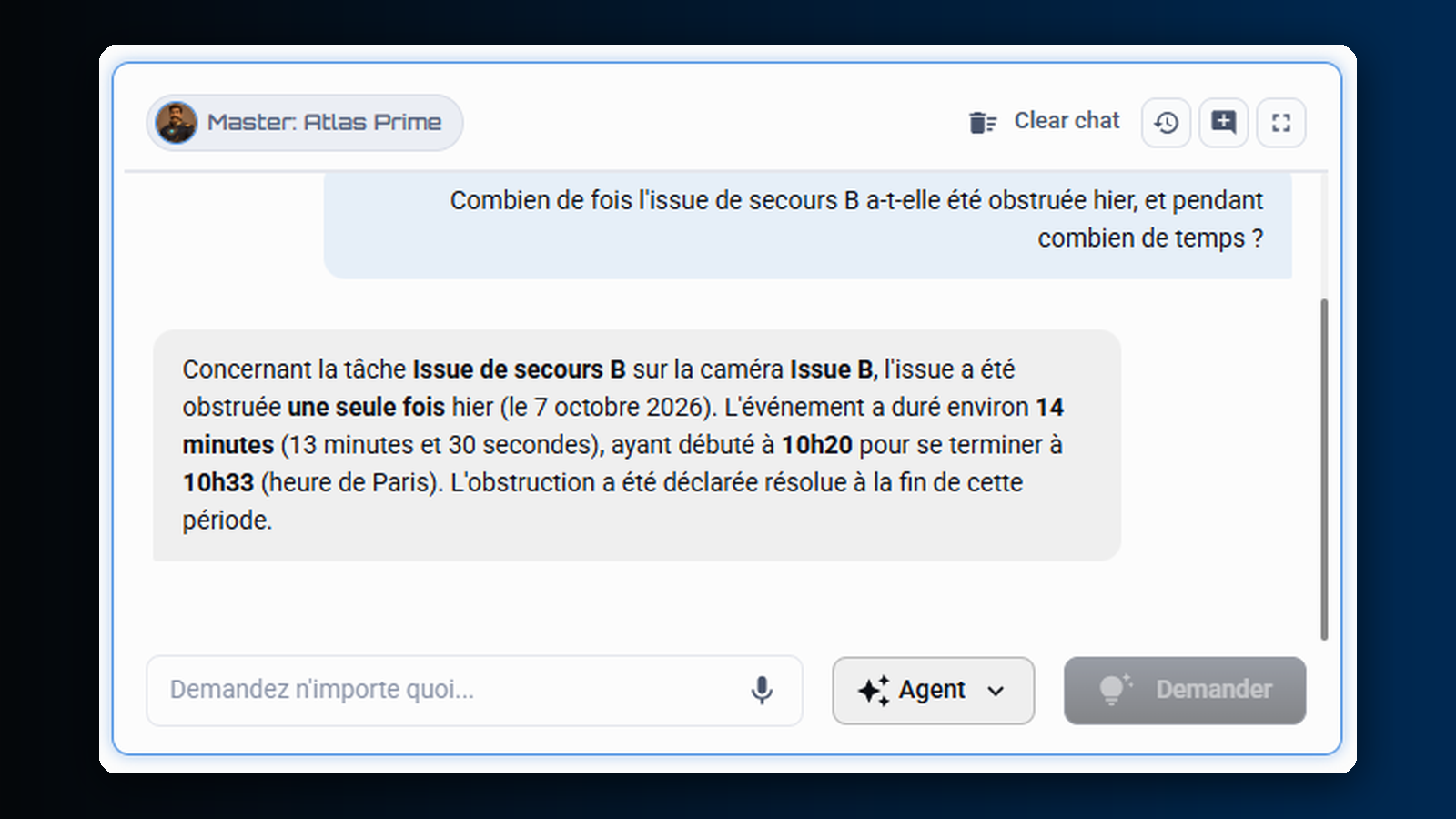
Camly keeps every episode with its image, time and duration. You can question the site in plain language. Not the people: that is refused by design.

Places and situations, never persons. The choice costs us use cases; it gives us a tool a works council can accept and a regulation can classify without ambiguity.
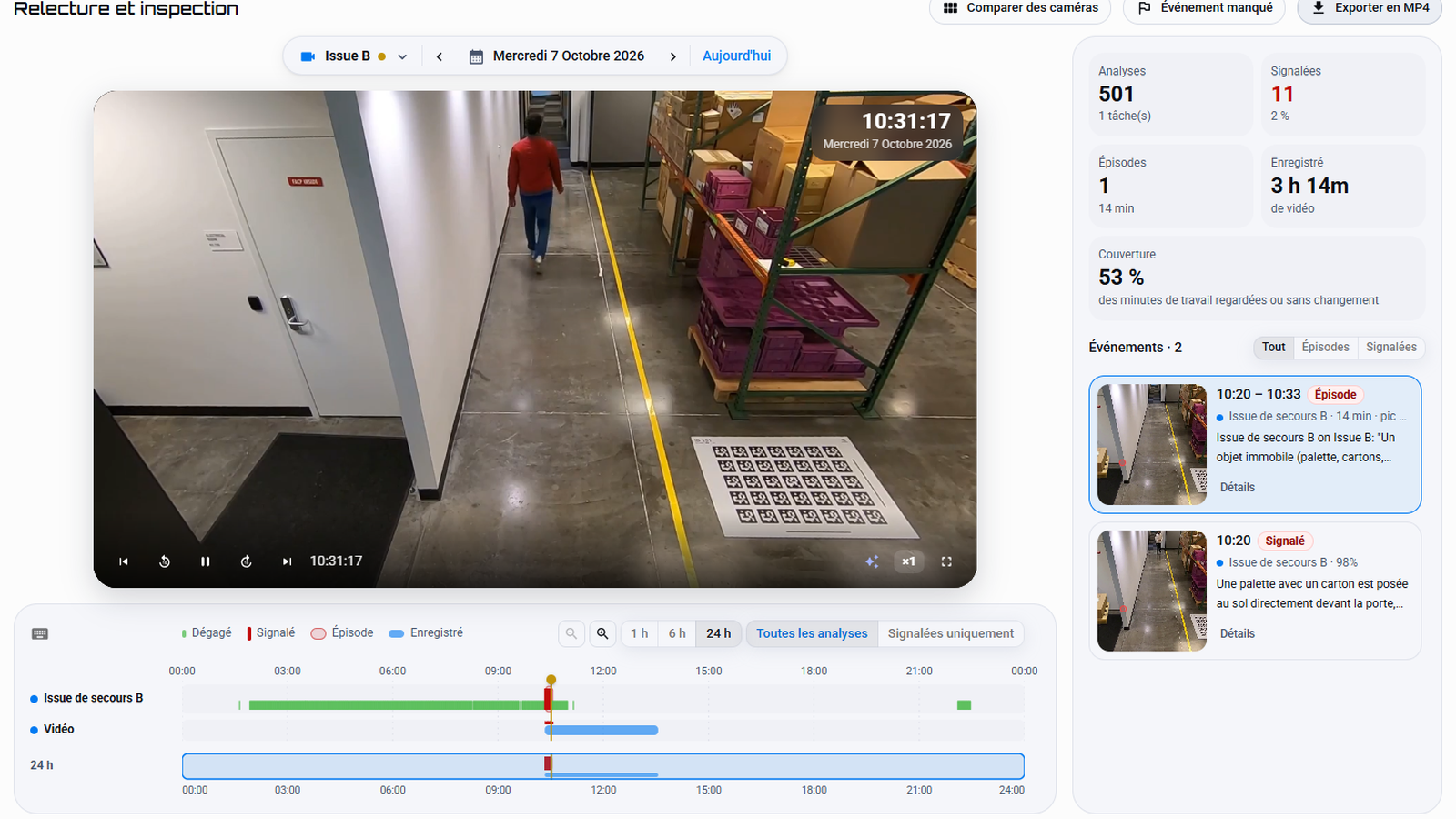
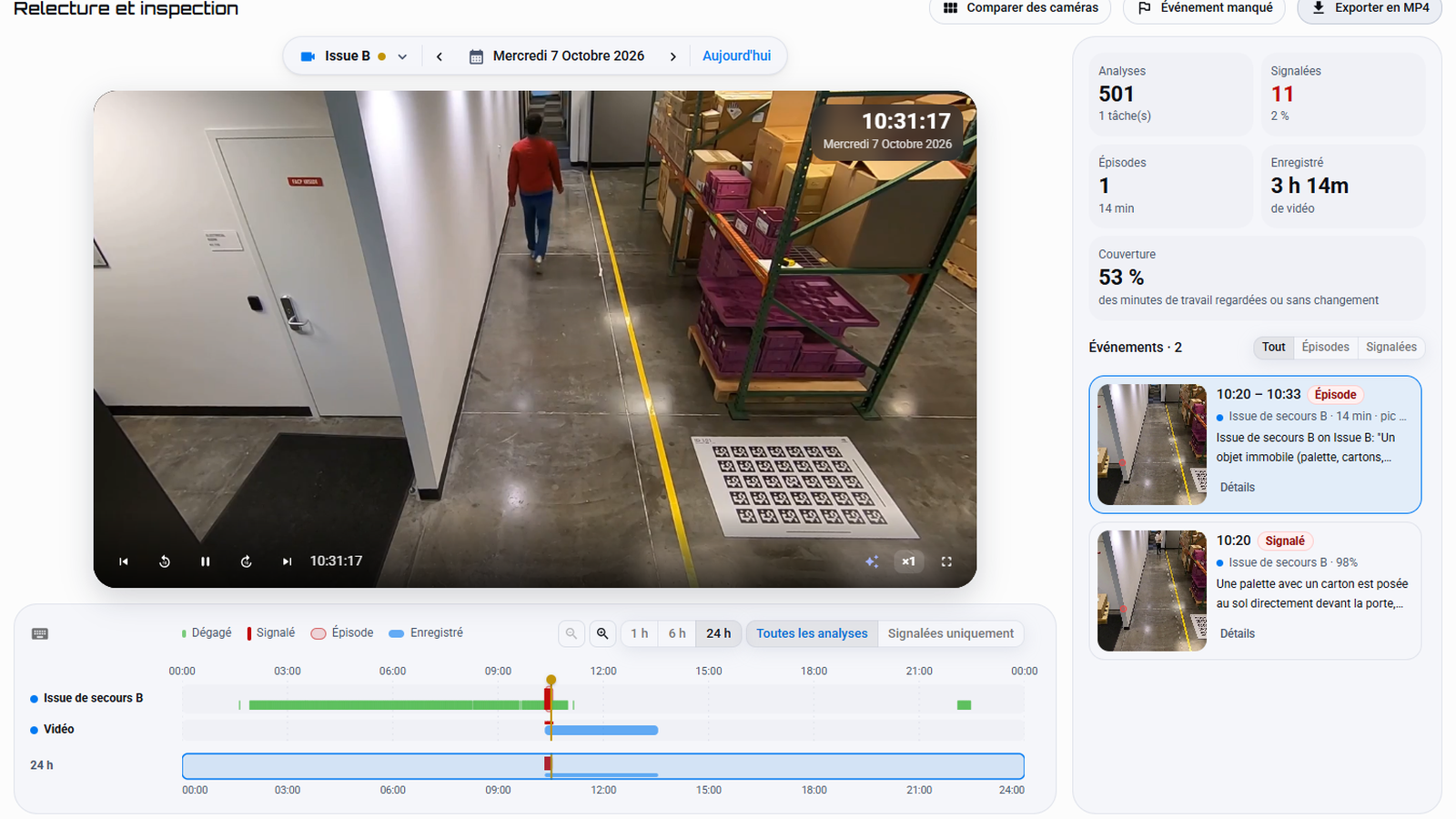
An alarm says something is happening. An episode says since when, until when, and how many times this month. That is what turns a camera into evidence of prevention.
Camly's three editions differ on one thing only: where the images are analysed. The full table, and a decision guide for IT and the works council.
The 2025 AT/MP cost scale, the warehousing accident figures and the contribution rate: what a lost-time accident costs, line by line, and why prevention does not sell on avoided accidents alone.
A safety tool on existing cameras goes in front of the works council. Here is the CNIL framework, what the EU AI regulation requires since August 2026, and our design choices.
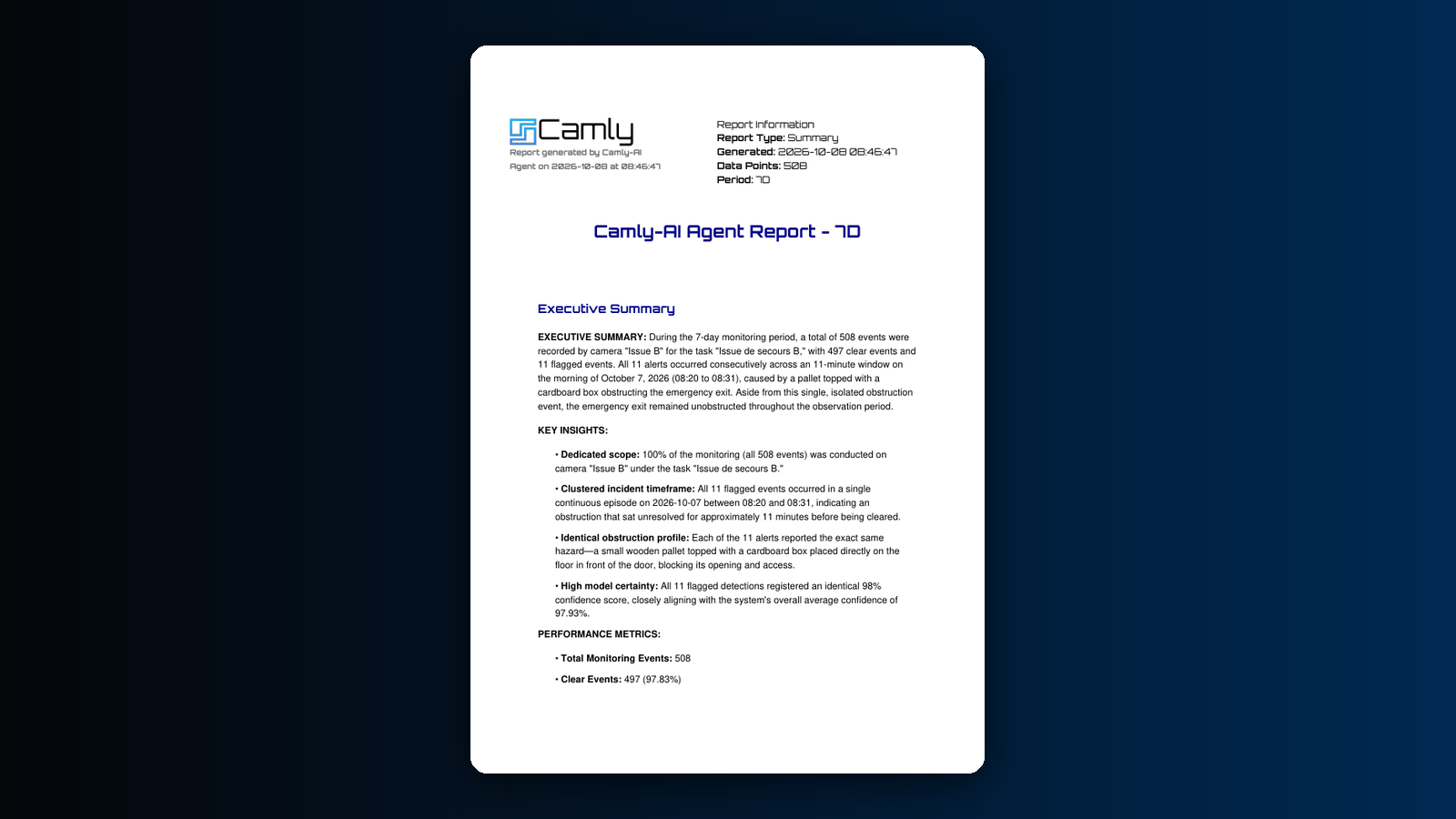
An episode seen by a camera has a zone, a state, a start, an end and a recurrence. A DUERP line has a hazard, a risk, an evaluation and an action. Here is how to get from one to the other.
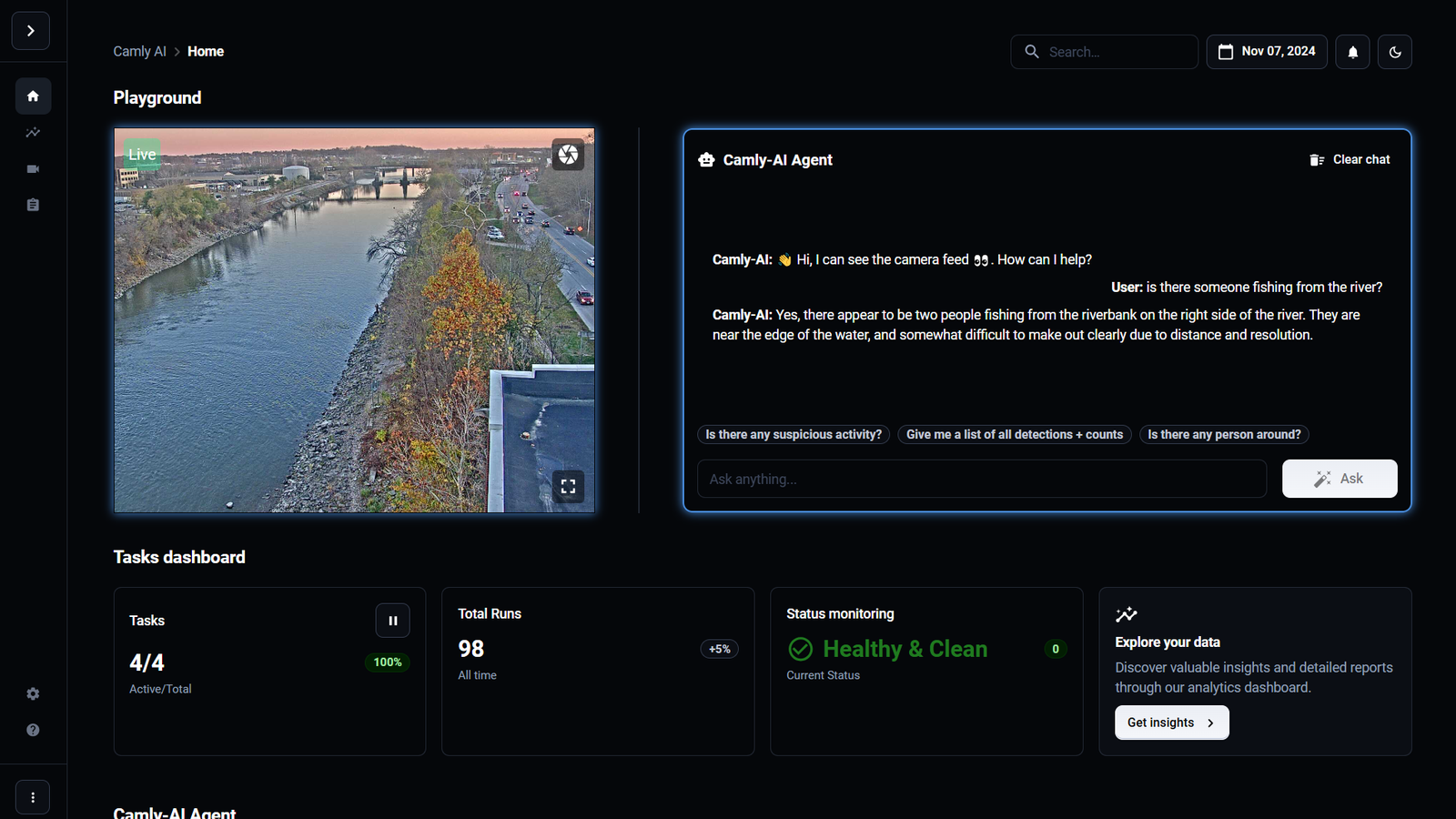
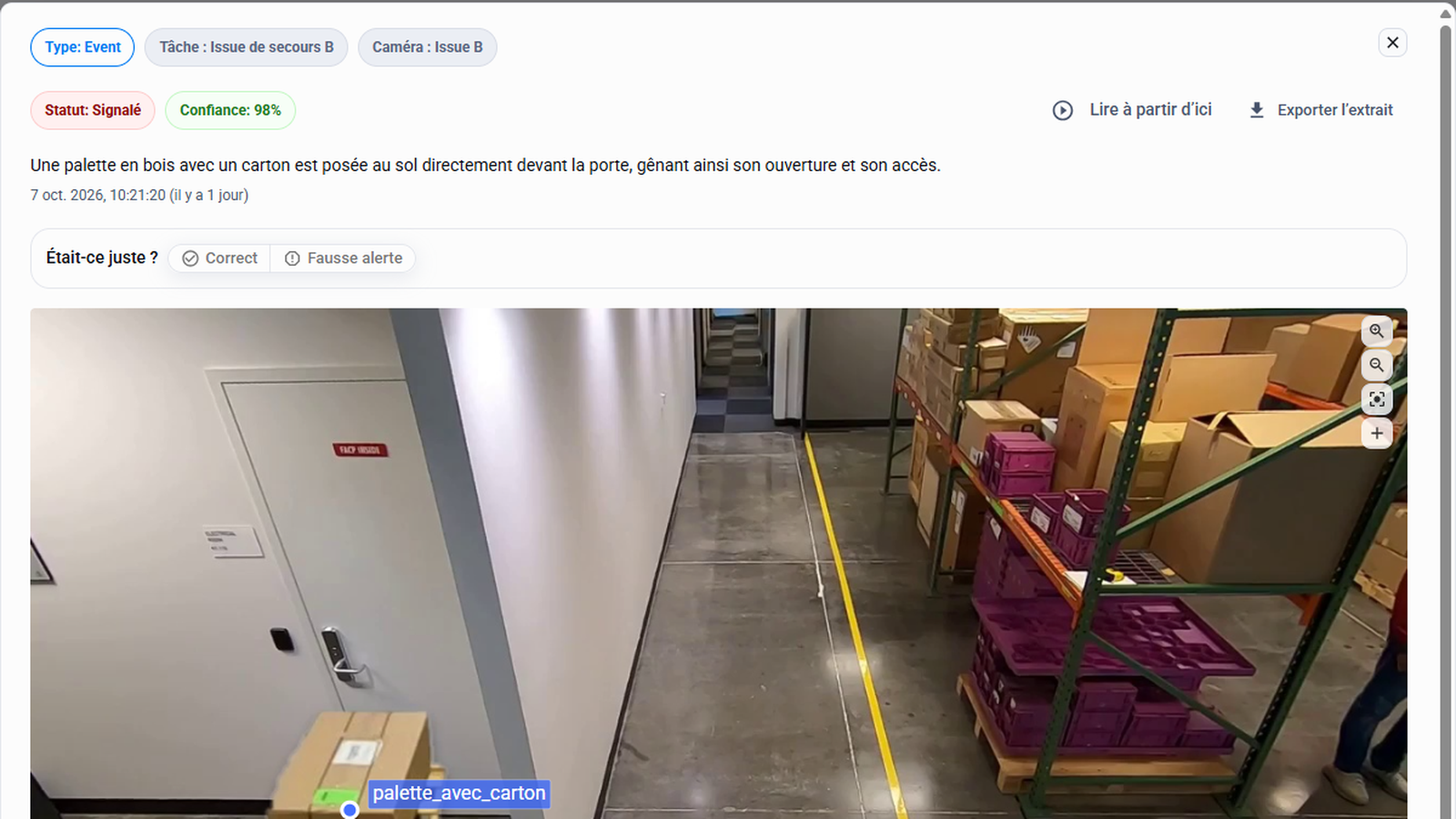
Every morning the receiving area overflows into the aisles. Everyone knows it. What is missing is the evidence, the duration and the recurrence to turn it into an action.
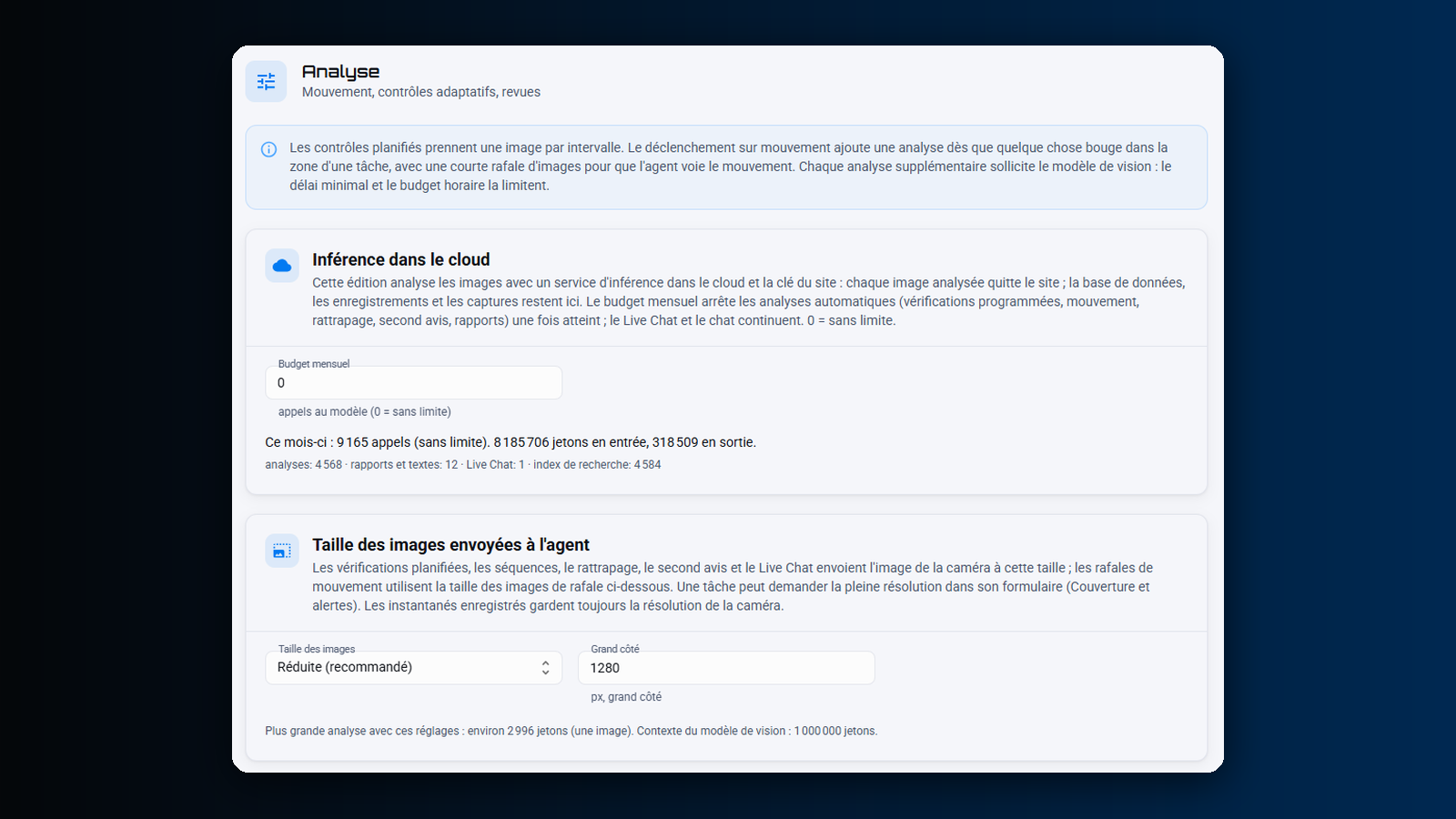
The property insurer audits four states your cameras see all the time: fire aisle, storage height, charging area, emergency exit. It sees them one day a year. You can see them every day.
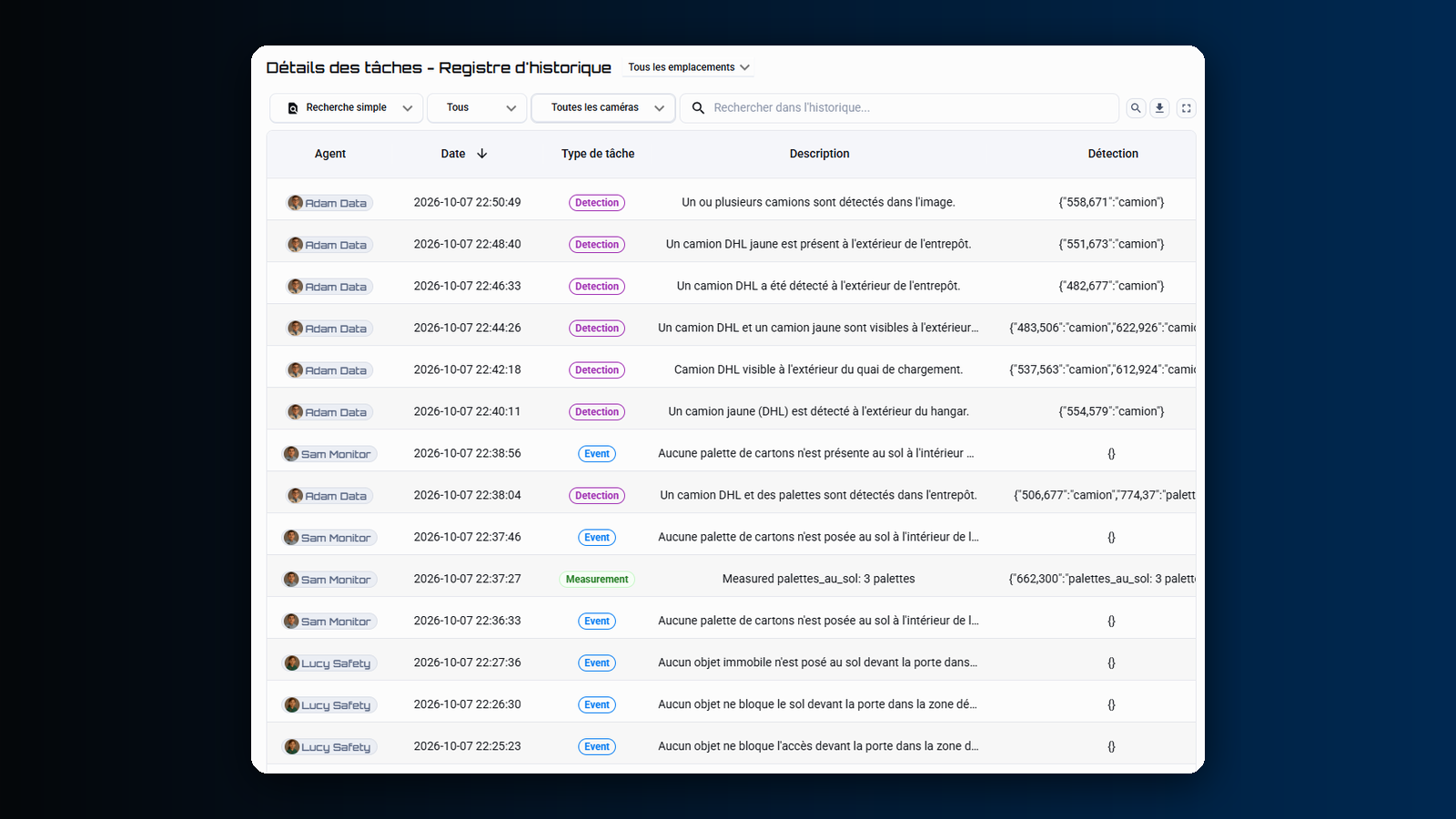
Some warehouse fires start outside, in waste or pallets stored against the building. The façade camera has been watching it for days. It just needs to be asked the question.
About 8,300 lost-time accidents a year involving forklifts, around ten deaths, half by lateral tip-over. What cameras can count, and what they must not do.
A faulty connector, cardboard against the charger, a rack too close. The charging area is one of the best-documented fire origins in a warehouse, and one of the easiest to watch.
A truck that pulls away while the forklift is still inside the trailer. Two causes, one device, and a dock camera that can prove, every day, that the chock is in place.
Investigators found the origin of a warehouse fire on the site's own cameras, fifteen months later. The cameras saw it; nobody was watching.